HOW IT WORKS
A wire that melts
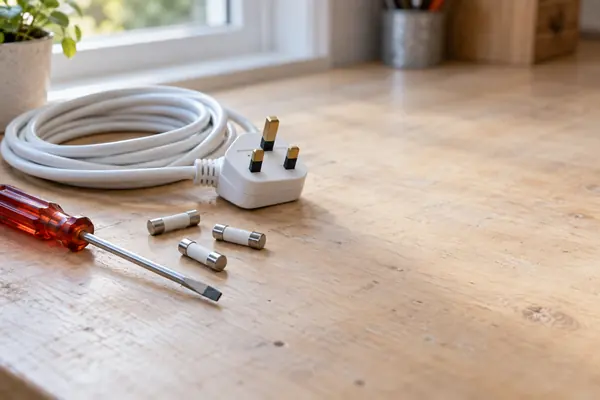
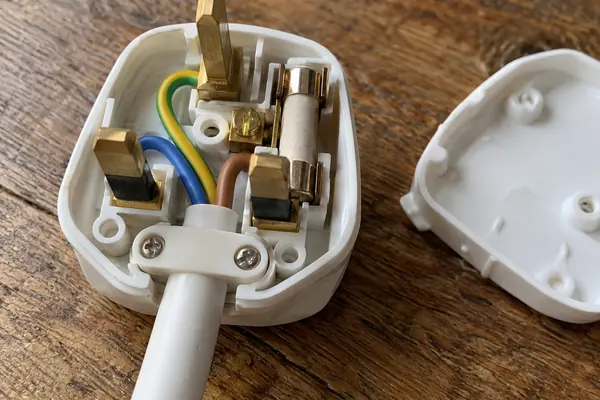
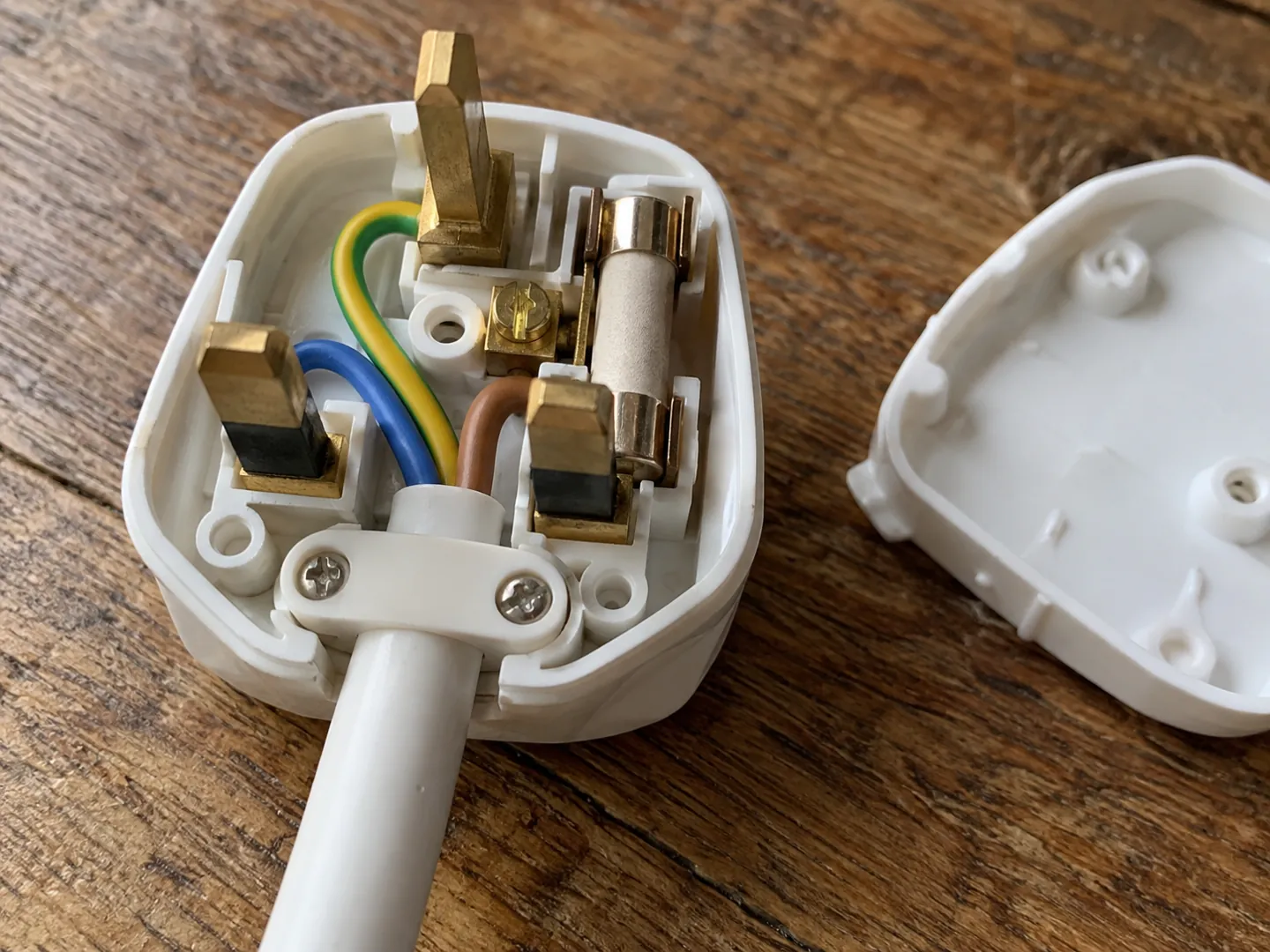
Oak National Academy describes a fuse as a thin wire that melts when a dangerously large current flows through it. It sits on the live wire in the plug.
Faults and earthing doodlefuse
INSIDE THE THREE-PIN PLUG
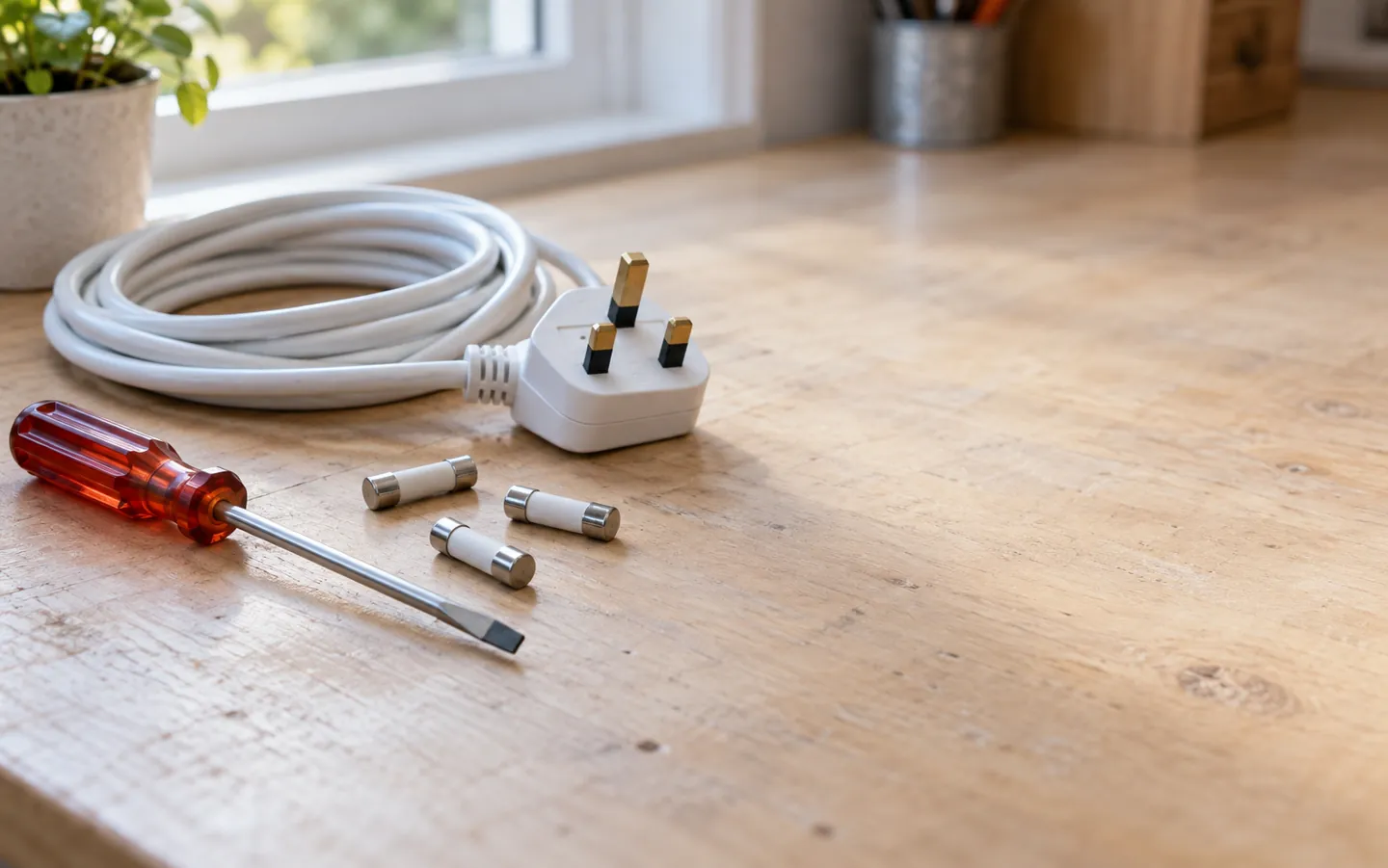
Every standard UK plug carries a small fuse for a reason.
3 A OR 13 A matched to the watts
≈ 700 W Where 3 A gives way to 13 A
It is a deliberate weak link. If an appliance or lead draws too much current, the fuse blows and cuts the power before the lead overheats, Greater Manchester Fire and Rescue Service explains.
THE SHORT ANSWER
It is a thin wire that melts when
a dangerously large current flows.
HOW IT WORKS
Oak National Academy describes a fuse as a thin wire that melts when a dangerously large current flows through it. It sits on the live wire in the plug.
Faults and earthingTHE RATING
As a general guide, appliances up to about 700 watts need a 3 amp fuse and those between about 700 and 3000 watts a 13 amp fuse.
Pick a ratingTHE OTHER GUARD
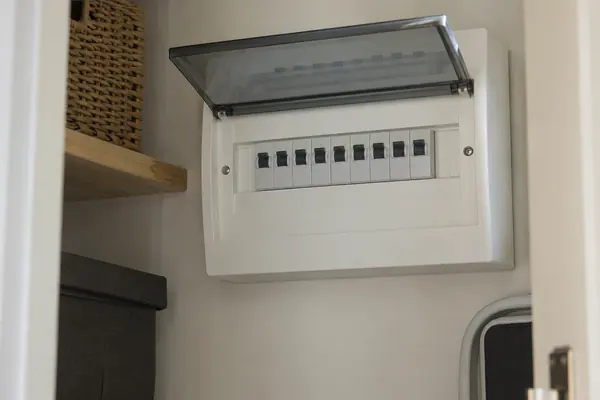
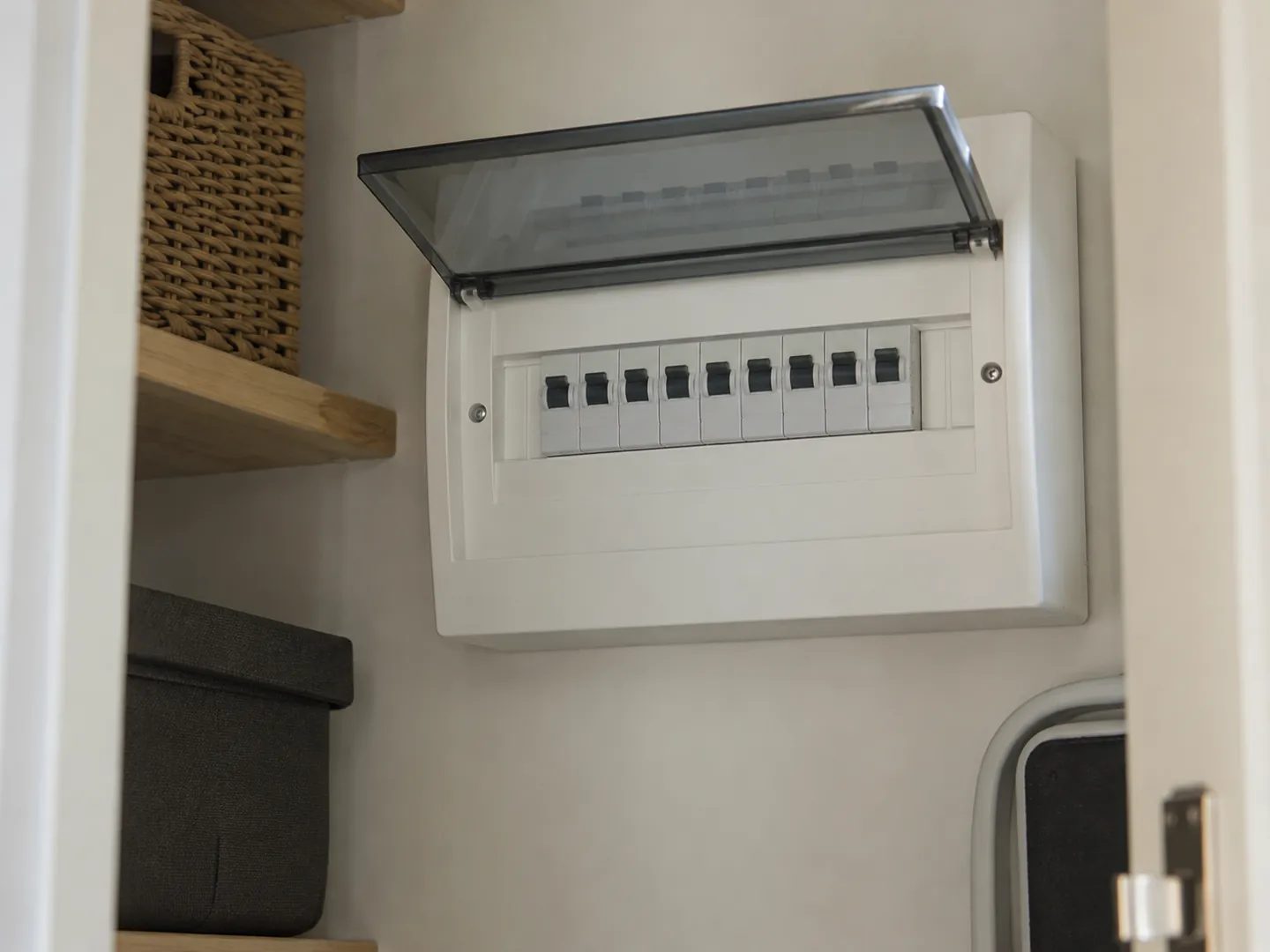
An RCD cuts the supply when current leaks to earth. The IET notes it does not protect against overcurrent; that is the job of a fuse or circuit-breaker.
See the numbersWHICH FUSE GOES IN?
Look for the power rating in watts on the appliance, then pick the matching case. The bar shows the fuse rating, from the smallest to the largest.
General guide from Greater Manchester Fire and Rescue Service. Appliances that meet product safety standards come with a correctly rated fuse already fitted.
FOUR HABITS TO TRY
The fire service lists simple warning signs and habits for sockets, plugs and adaptors. None of them needs tools.
Hot plugs or sockets, scorch marks, fuses that often blow or flickering lights point to loose wiring or other faults.
If any coloured wire is visible between the plug and the lead, the plug needs replacing properly.
Plugging too many appliances into one socket risks overheating. Use only one adaptor per socket and avoid chaining adaptors together.
A bar adaptor on a lead is safer than a block adaptor, the fire service says.
TWO NUMBERS WORTH KNOWING
Where a 3 amp fuse stops being enough,
and how small a leak an RCD is built to catch.
≈ 700 W
Where 3 A gives way to 13 A
Appliances up to about 700 watts need a 3 amp fuse; between about 700 and 3000 watts, a 13 amp fuse, according to Greater Manchester Fire and Rescue Service.
FUSE GUIDE · GMFRS
30 mA
Residual operating current for many RCDs
The IET cites RCDs with a rated residual operating current not exceeding 30 mA for outdoor mobile equipment, bathroom and shower locations and general-use socket-outlets.
RCD RATING · IET
UK law backs the fuse: the Plugs and Sockets etc. (Safety) Regulations 1994 say a standard plug shall contain or be accompanied by a fuse link which conforms to BS 1362.
FAULTS AND EARTHING
A short circuit happens when a wire becomes loose and touches the wrong part of a circuit, Oak National Academy explains. The earth wire connects an appliance's metal casing to the ground.
If the metal case becomes live, current flows along the earth and live wires, melts the fuse and turns the electricity off. An RCD adds a different check: it compares the current going out on the line with the current returning on the neutral, and disconnects if they differ.
Questions
Greater Manchester Fire and Rescue Service says the fuse is designed to protect the lead rather than the appliance. It blows if too much current flows, cutting the power before the lead overheats.
As a general guide, appliances up to about 700 watts need a 3 amp fuse (red) and those between about 700 and 3000 watts a 13 amp fuse (brown). Some older appliances used 5 amp fuses (black).
Find out why it blew and fix the fault in the appliance, then fit a new fuse of the same rating, the fire service advises.
Yes. The Plugs and Sockets etc. (Safety) Regulations 1994 say a standard plug shall contain or be accompanied by a fuse link conforming to BS 1362.
No. The IET explains that an RCD disconnects the supply when current leaks to earth and does not protect against overcurrent, which is the job of a fuse or circuit-breaker.
Updated
ABOUT THIS NAME
doodlefuse.com is part of the DoodleSale portfolio. It isn't in an auction right now, but you can ask about leasing it.